
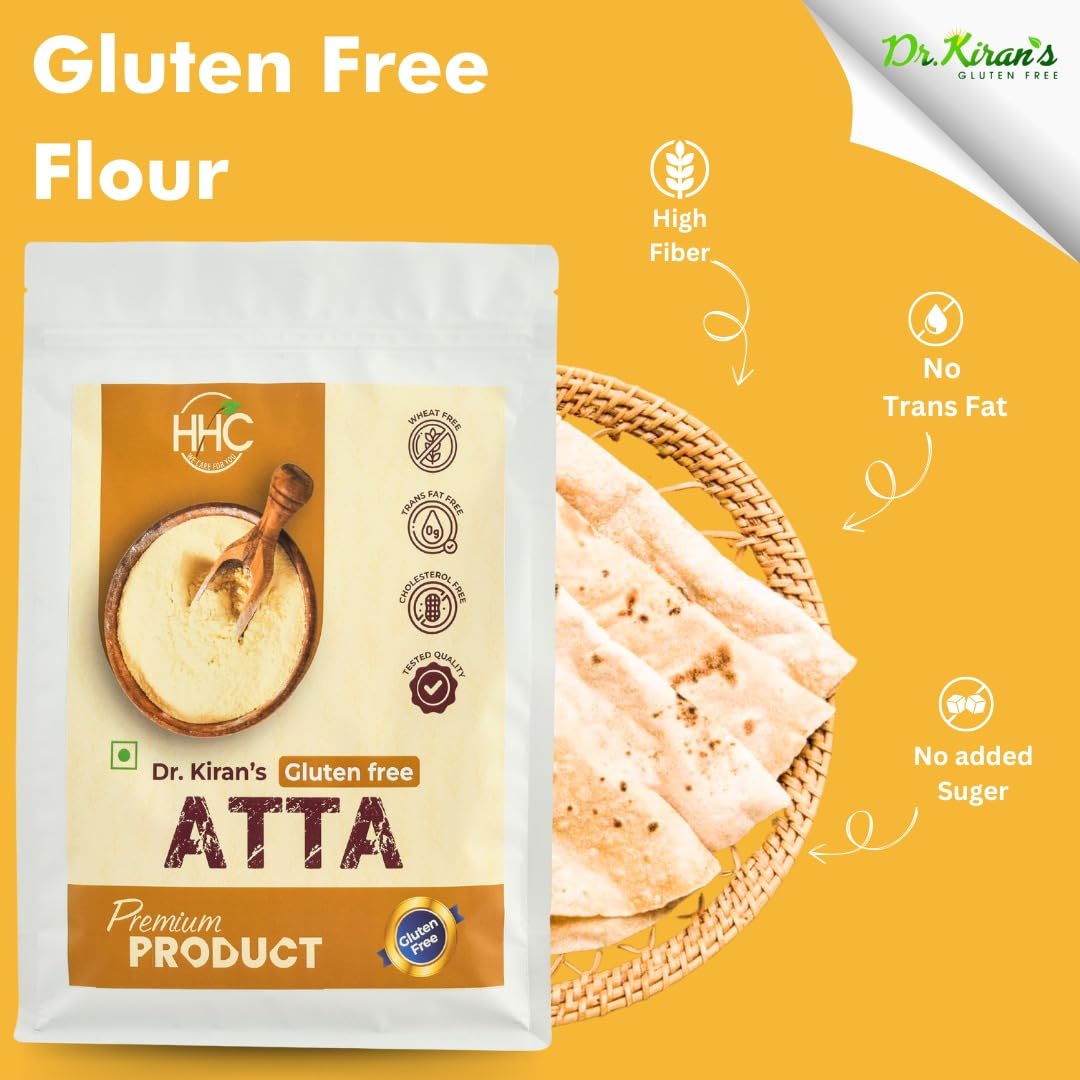
If you’ve been searching for gluten free atta online in India, you already know the problem: most “gluten free” flour on supermarket shelves is either a single grain like rice or besan, or it’s imported and priced out of daily use. A good everyday roti flour needs to behave like wheat atta — soft dough, pliable rotis, and real nutrition — without the gluten. Here’s what to actually look for, and where to buy it.
What Makes an Atta Truly Gluten Free
True gluten free atta isn’t wheat with the gluten removed — wheat, barley, and rye are simply left out from the start, and replaced with naturally gluten-free grains and pulses. The best blends combine several of these so the roti has the softness and stretch that a single millet flour can’t give you on its own:
- Jowar (sorghum) — light, easy to digest, the closest in texture to wheat
- Bajra (pearl millet) — iron-rich, warming, good for winter rotis
- Ragi (finger millet) — one of the richest plant sources of calcium
- Besan (chickpea flour) — adds protein and helps bind the dough
Dr. Kiran’s Gluten Free Atta is milled from a blend like this, and it’s important that it’s processed in a completely gluten-free facility — a “may contain traces” flour isn’t safe for anyone with celiac disease, only useful for general wellness eating.
Health Benefits of Switching to Gluten Free Atta
- Easier digestion — millet-based flours are lighter than refined wheat and cause less bloating or heaviness after meals
- Steadier blood sugar — millets have a lower glycemic impact than refined wheat flour, so energy stays more even through the day
- Higher mineral content — jowar, bajra and ragi carry more iron, magnesium and calcium than refined maida or plain wheat atta
- Safe for celiac disease and gluten intolerance — genuinely free of wheat, barley and rye, not just “low gluten”
How to Choose When Buying Gluten Free Atta Online
With so many brands now selling “gluten free” atta online, a few checks separate the genuinely good ones from marketing labels:
- Check the full ingredient list, not just the front label — it should name actual grains (jowar, bajra, ragi, besan), not just say “millet mix”
- Look for a dedicated gluten-free processing facility, not a shared line with wheat — this matters most if you have celiac disease
- Check FSSAI licensing on the pack — a licensed manufacturer is accountable for what’s actually in the bag
- Prefer freshly milled, small-batch flour over long-shelf-life imports — freshness affects both taste and nutrient retention
Try Dr. Kiran’s Gluten Free Atta
Our Gluten Free Atta is handmade in a dedicated gluten-free facility, low in carbs, and higher in protein than regular wheat atta — made to hold together for soft, everyday rotis, not just as an occasional health-food substitute. It’s part of our full gluten-free range, alongside our Gluten Free Suji and Gluten Free Besan, so you can build an entire kitchen around it. Shop the Gluten Free Atta here, or browse All Products to see the full range.
Frequently Asked Questions
Is gluten free atta the same as multigrain atta?
No. Most “multigrain” atta sold in India still contains wheat as its base grain, just blended with a few others — it still has gluten. Gluten free atta excludes wheat, barley, and rye entirely.
Can rotis made from gluten free atta stay soft?
Yes, with the right blend and technique. Use warm (not cold) water to knead the dough, let it rest for 15-20 minutes before rolling, and cook on a slightly lower flame than you would for wheat rotis. A good multi-grain gluten-free blend, like jowar-bajra-ragi-besan, holds together far better than any single millet flour alone.
Is gluten free atta good for weight loss?
It can support weight management goals because millet-based flours are higher in fiber and have a lower glycemic impact than refined wheat, which helps with satiety. It isn’t a guaranteed weight-loss food on its own — portion size and overall diet still matter most.


Leave a comment